
Recent news coverage of cuddle beds in UK hospices has brought an important but often overlooked part of care into the public conversation: the need for physical closeness during long-term and end-of-life care.
Cuddle beds are specialist hospital beds that can be widened to allow a partner or family member to lie safely beside the person receiving care. In hospice settings, they give families the opportunity to hold hands, share a much-needed cuddle, or simply spend time together as they normally would.
While Opera Beds doesn’t sell hospice cuddle beds, the stories behind them resonate deeply with our team and raise an issue that affects many couples caring for a loved one at home.
When one person needs a specialist bed, couples can find themselves sleeping separately for the first time in years. That is why we want to continue the conversation beyond hospice walls and consider what closeness can look like during long-term care at home.
The specialist cuddle beds featured in recent hospice appeals cost almost £15,000 and are designed primarily for inpatient care settings. For couples looking for a longer-term solution at home, a double or dual profiling bed offers a different, more accessible option.
Why the conversation around cuddle beds matters beyond hospice care
Cuddle beds are usually discussed in relation to hospice and end-of-life care. But physical separation can affect couples in many other situations.
A long-term condition, reduced mobility, serious injury, or a period of recovery may mean that one partner needs more support in bed. A standard double bed doesn’t offer positioning options, height adjustment, or access for care, so the other partner feels they have no choice but to move into a separate bed or room.
While this is often accepted as an unavoidable part of caring for someone, staying at home should not have to mean giving up all the routines that make home life feel familiar.
In fact, research published in the Journal of Clinical Nursing has shown that chronic illness can affect a person’s identity, their relationships, and even their sense of everyday normality, but being able to hold on to meaningful roles and connections can help someone continue to feel like themselves, rather than feeling defined by their condition.
For many, the emotional reality of long-term home care can be challenging in itself
When one person needs ongoing support, it can change the couple’s relationship and daily routine.
A husband, wife, or partner may take on more caring responsibilities, and medication, appointments, and physical support can gradually become a larger part of life together. Although couples adapt, it can sometimes feel as though the roles of patient and carer are replacing the relationship they had before.
Changes to sleeping arrangements can add to that feeling.
Sleeping separately can take away these small but meaningful moments – leading the person receiving care to feel isolated, while their partner loses an important sense of closeness outside their caring role.
And the unfortunate but unavoidable reality is that this can affect people at any stage of life. Someone recovering from an accident or living with paralysis or another long-term condition may need specialist support, but that doesn’t mean they should automatically have to sleep apart from their partner.
The importance of human connection in care
Touch is one of the simplest ways we reassure and connect with one another, but it goes beyond emotional reassurance.
A 2024 review of more than 200 studies found that touch could have benefits for both physical and mental well-being, particularly in relation to pain management, anxiety, and depression.
Of course, a shared bed isn’t going to remove the challenges of long-term care, but it can help couples protect an important part of their relationship as they adjust to those challenges together. And that can make an unimaginably hard situation a little bit less so.
Real-world perspectives: Opera Beds’ occupational therapist shares her insights
Opera Beds’ occupational therapist, Barbara, regularly speaks with couples and families who are trying to find the right balance between practical support and everyday life at home.
Choosing a bed needs to take someone’s physical care needs into account, but it should also consider how they live, what matters to them, and how any new equipment will affect both people sharing the space.
“Making a big change to your living setup is never straightforward, but when I speak to couples about bringing a profiling bed into their home, I nearly always see that the emotional side of the decision is often just as important as the practical one. Yes, people may need extra support with positioning or mobility, but they still want their bedroom to feel like a shared space they enjoy spending time in together. If it meets the patient’s physical care needs, a dual profiling bed can help couples stay close while giving each person the comfort and support they need.”
Barbara Franks, Occupational Therapist at Opera Beds.
How dual profiling beds support closeness at home
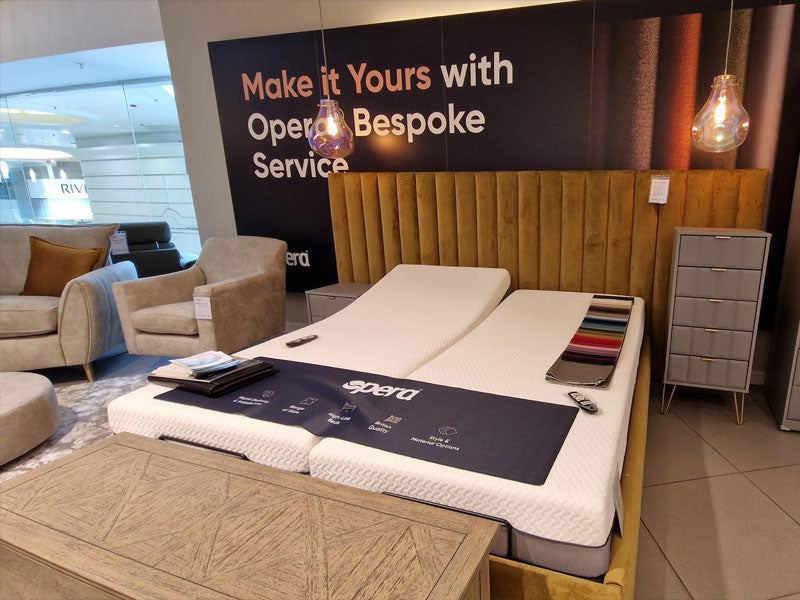
A dual-profiling bed is designed for two people sharing a bed when one or both need additional support.
It has two separate mattress platforms, so each person can adjust their side without changing the other. For example, one partner might need to raise their upper body or legs to rest comfortably, while the other may prefer to lie flat.

Opera’s Signature Comfort Dual profiling bed brings these individual adjustments together into a shared bed frame. Its height can also be adjusted, helping with getting into and out of bed and making it easier to provide care where needed.
A dual profiling bed is not the same as a hospice cuddle bed. Cuddle beds differ from Opera's Dual Profiling bed as they are designed to allow a family member to temporarily join someone in a specialist patient bed. The Signature Dual Profiling bed recognises the same need for closeness, but provides a longer-term shared sleeping solution for couples at home.
Supporting care without making the bedroom feel clinical
Bringing specialist equipment into the home can sometimes make a bedroom feel more like a care setting than a personal space, but this doesn’t have to be the case.
The Signature Comfort Dual is designed to offer the functions of a profiling bed while still looking perfectly at home in your bedroom. Its upholstered frame and choice of headboards and fabrics create a softer, more familiar appearance than a traditional hospital-style bed.
That may sound like a small detail, but it can make a real difference. A bedroom that still feels warm and personal can help both partners adjust to the change more comfortably.
Opera Beds supplies profiling beds to the NHS, private care homes, and people managing care at home. This experience means we understand the practical side of choosing specialist equipment, while also recognising that a bed is part of someone’s home and daily life.
Keep loved ones close, wherever their care needs are met
The stories about cuddle beds have started a valuable conversation about the place of human connection in care.
In hospices, these specialist beds are helping families remain close at an incredibly important time. At home, dual profiling beds offer a different option for couples who need individual positioning or care support but want to continue sharing a bed.
A dual profiling bed won’t be right for everyone. Where it is suitable, though, it can help couples hold on to the comfort and familiarity of everyday closeness that matters so much.
To find the right bed for your home care needs, use our bed selector tool for tailored recommendations or book a consultation call with one of our experts.