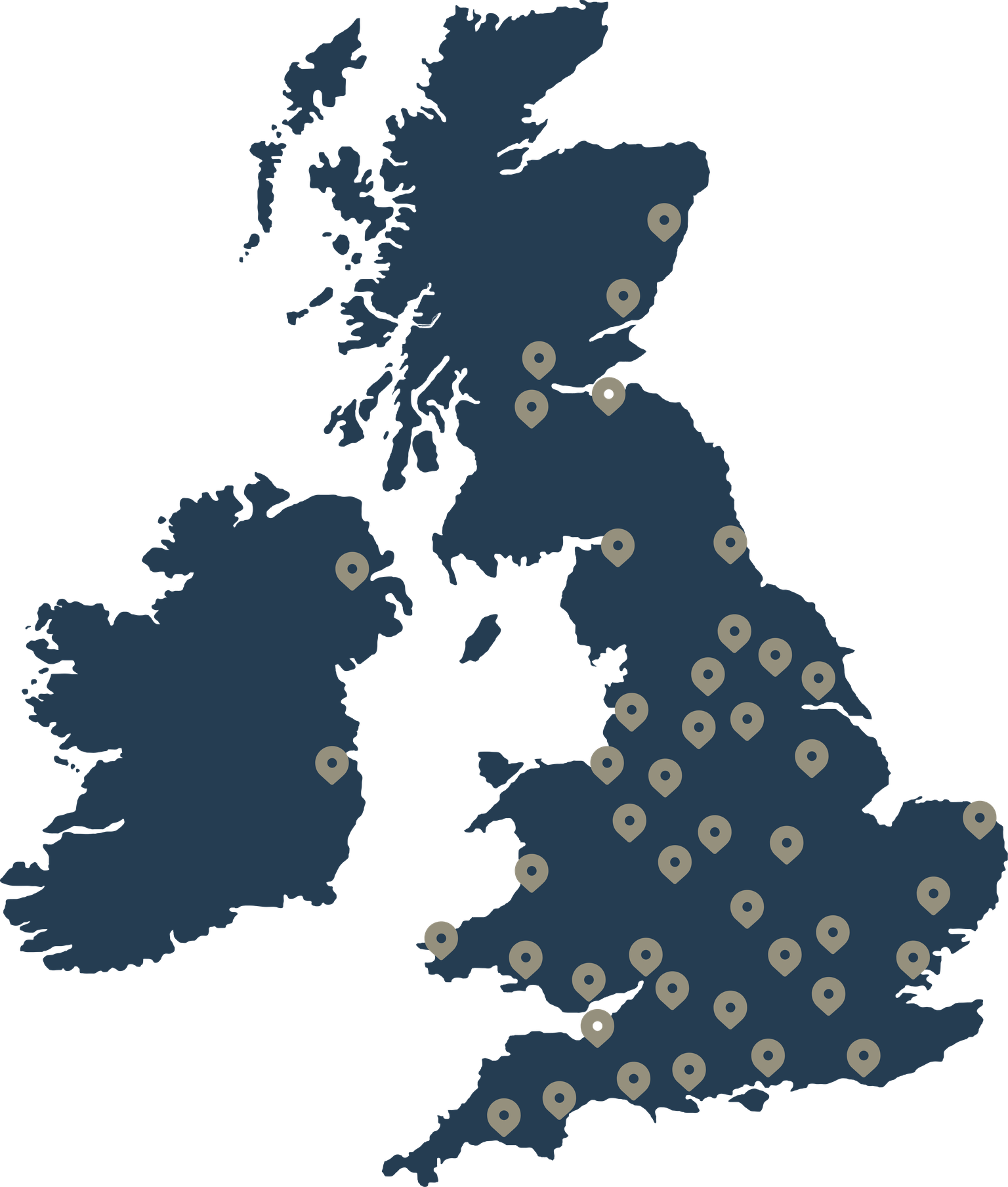

Almost half of adults in England are now living with a long-standing illness or health condition, according to the latest national health survey.1
Yet the burden of chronic illness is far from evenly distributed. In some parts of the country, respiratory disease, diabetes, cardiovascular illness, and dementia appear together at far higher rates than elsewhere, creating concentrated pockets of long-term health pressure.
By analysing NHS and public health data, we’ve identified England’s chronic illness hotspots, revealing the areas where multiple long-term conditions are most common today and where health pressures are expected to grow fastest in the years ahead.
As more people live longer with conditions that affect mobility, breathing, or day-to-day comfort, practical support at home becomes increasingly important.
Profiling care beds are designed to make everyday movement easier by letting users adjust its height and position at the touch of a button, helping with safer transfers, improved comfort, and reduced strain during rest or care.
For people managing long-term conditions such as arthritis, Parkinson’s, multiple sclerosis, or stroke recovery, that added flexibility can make it easier to stay comfortable and independent at home for longer.
Key takeaways
-
Blackpool records the highest overall chronic illness burden in England, with a score of 8.74 out of 10, driven by chronic obstructive pulmonary disease (COPD) prevalence of 3.9% – more than double the national average of 1.9%.
-
Stoke-on-Trent has the highest dementia prevalence, with 6,594 recorded cases per 100,000 people aged 65+, compared with the English average of 4,509.
-
Swindon has seen the fastest five-year rise in chronic illness, with dementia prevalence increasing by 74.8% and cardiovascular mortality rising by 25.0%.
-
Luton records the sharpest diabetes growth, with prevalence up 50.1% in five years – more than four times the national increase of 11.5%.
-
Rotherham is expected to face the greatest future chronic illness pressure by 2036, with projected diabetes prevalence reaching 12.5% and dementia rising to 9,431 cases per 100,000 people aged 65+.
Where chronic illness is most common in England
Across England, the national average for diabetes prevalence is 7.9%, yet many of the highest-ranking local authorities record levels above 9%, with several exceeding 10%. Respiratory illness follows a similar pattern, with COPD prevalence averaging 1.9% nationally but rising above 3% in several of the areas ranked highest for overall chronic illness burden.
Many of the areas with the highest chronic illness scores, including Blackpool, Stoke-on-Trent, Rotherham, Gateshead, and North East Lincolnshire, are northern or coastal authorities, with former industrial towns heavily represented throughout the top rankings.
|
Rank |
Local authority |
Recorded COPD prevalence |
Recorded rheumatoid arthritis prevalence |
Recorded diabetes prevalence |
Cardiovascular disease mortality rate per 100,000 people* |
Recorded dementia prevalence per 100,000 people** |
Chronic illness score /10 |
|
1 |
Blackpool |
3.9% |
0.9% |
9.6% |
297 |
5,286 |
8.7 |
|
2 |
Stoke-on-Trent |
2.7% |
0.9% |
9.4% |
264 |
6,594 |
8.2 |
|
3 |
Rotherham |
3.4% |
0.9% |
9.1% |
256 |
5,471 |
8.1 |
|
4 |
Gateshead |
2.9% |
1.2% |
8.6% |
268 |
4,937 |
8.0 |
|
5 |
North East Lincolnshire |
3.2% |
0.9% |
8.8% |
282 |
5,053 |
7.9 |
|
6 |
Walsall |
2.3% |
1.0% |
10.6% |
298 |
4,509 |
7.7 |
|
7 |
Rochdale |
2.6% |
0.9% |
9.5% |
260 |
4,781 |
7.4 |
|
8 |
Bradford |
2.0% |
0.8% |
10.4% |
278 |
5,329 |
7.3 |
|
8 |
Wolverhampton |
1.7% |
0.9% |
9.8% |
287 |
4,957 |
7.3 |
|
10 |
Oldham |
2.3% |
0.9% |
9.7% |
253 |
4,767 |
7.2 |
*Age-standardised, ** People aged 65+

1. Blackpool ranks first overall, with a chronic illness score of 8.7 out of 10
Blackpool’s highest pressure point is respiratory disease. COPD prevalence stands at 3.9%, more than double the study average of 1.9%, making Blackpool the local authority with the highest recorded rate in England.
Cardiovascular mortality is also among the highest in the ranking at 297 deaths per 100,000 people, compared with a national average of 219, while 9.6% of residents are living with diabetes.
Blackpool’s position in the ranking also shows wider health inequalities seen in parts of England. Public health data shows the town has higher smoking rates and obesity levels than the national average, both of which are linked to conditions such as COPD, cardiovascular disease, and diabetes.2
2. Stoke-on-Trent ranks second, with a chronic illness score of 8.2 out of 10
Dementia puts Stoke-on-Trent under particular pressure, with 6,594 recorded cases per 100,000 people aged 65 and over, the highest figure anywhere in England and well above the average of 4,509.
Diabetes prevalence is also elevated at 9.4%, while cardiovascular mortality reaches 264 deaths per 100,000 people. COPD prevalence stands at 2.7%, lower than in Blackpool but still significantly above the English average.
Public health profiles show that the city's healthy life expectancy remains below the national average, indicating that many residents spend more of their later years in poorer health.3 That can increase pressure on dementia care, particularly where long-term conditions such as diabetes and cardiovascular disease are already common.
3. Rotherham ranks third, with a chronic illness score of 8.1 out of 10
Rotherham stands out because no single condition sits far above the others. Instead, all five indicators remain consistently elevated, resulting in one of the most persistent chronic illness burdens in the ranking.
COPD prevalence is at 3.4%, well above the England average, while 9.1% of residents are living with diabetes. Cardiovascular mortality reaches 256 deaths per 100,000 people, and dementia prevalence stands at 5,471 cases per 100,000 people aged 65 and over, again above the national average.
Forecasts also show that the prevalence of these chronic illnesses in Rotherham is expected to continue rising over the coming decade (more on this below), adding to demand in the area.
The areas with the fewest cases of chronic illnesses
At the other end of the ranking, the lowest chronic illness scores are concentrated largely in London boroughs and parts of the South East, where respiratory illness and cardiovascular mortality remain well below the England average.
- Kensington and Chelsea has the lowest overall chronic illness score at 1.6, recording the lowest cardiovascular mortality of the study at 154 deaths per 100,000 people.
- Wokingham follows Kensington and Chelsea, with cardiovascular mortality at 157 deaths per 100,000 people.
- Westminster ranks next at 1.7 out of 10, with COPD prevalence at 0.8%, less than half the England average of 1.9%.
Lower-ranking areas do not necessarily show low levels across all conditions, however. Some boroughs near the bottom of the table still show relatively high dementia prevalence among older residents, showing that longer life expectancy can increase the proportion of residents living into later life, when dementia becomes more common.
In Wandsworth, for example, dementia prevalence reaches 5,648 cases per 100,000 people aged 65 and over, despite the borough recording one of the lowest overall chronic illness scores.
The areas where chronic illness is rising fastest
The fastest increases in chronic illness are appearing in a different part of the country from today’s highest-burden areas. While many of the current hotspots are found in northern and coastal authorities, recent growth is strongest across parts of the South East, commuter-belt authorities, and fast-growing urban areas, where several long-term conditions are rising well above national averages.
Based on our analysis of local health data across England, diabetes prevalence has increased by 11.5% over five years, while recorded dementia prevalence has risen by 28.4%.
In the highest-ranking growth areas, both are rising much faster, suggesting that places with lower historic burdens are now seeing sharper pressure build across age-related and metabolic conditions simultaneously.
|
5-year change |
|||||||
|
Rank |
Local authority |
Recorded COPD prevalence |
Recorded rheumatoid arthritis prevalence |
Recorded diabetes prevalence |
Cardiovascular disease mortality rate per 100,000 people* |
Recorded dementia prevalence per 100,000 people** |
Chronic illness acceleration score /10 |
|
1 |
Swindon |
18.6% |
13.1% |
23.0% |
25.0% |
74.8% |
8.7 |
|
2 |
Central Bedfordshire |
4.8% |
19.0% |
30.8% |
12.6% |
23.8% |
8.3 |
|
3 |
Luton |
15.5% |
30.8% |
50.1% |
-2.6% |
29.4% |
8.2 |
|
4 |
Bracknell Forest |
-0.1% |
19.6% |
29.5% |
26.6% |
18.2% |
7.8 |
|
5 |
West Berkshire |
4.0% |
11.0% |
28.9% |
22.4% |
19.5% |
7.6 |
|
5 |
Southampton |
12.4% |
24.5% |
30.4% |
-1.8% |
21.6% |
7.6 |
|
7 |
Westminster |
9.1% |
27.2% |
17.2% |
11.2% |
20.8% |
7.5 |
|
7 |
Croydon |
0.6% |
17.7% |
21.6% |
16.5% |
27.0% |
7.5 |
|
9 |
Rutland |
6.6% |
32.5% |
20.0% |
11.7% |
17.1% |
7.4 |
|
9 |
Milton Keynes |
19.3% |
21.1% |
33.5% |
11.0% |
4.3% |
7.4 |
*Age-standardised, ** People aged 65+

1. Swindon records the fastest overall rise in chronic illness
Swindon has the most extreme five-year growth in chronic illnesses in England, with a score of 8.7 out of 10.
All five measured conditions have increased over the period, but dementia shows the sharpest rise, climbing by 74.8%, far ahead of every other indicator. Diabetes has also increased by 23.0%, while cardiovascular mortality has risen by 25.0%.
What makes Swindon stand out is the breadth of change rather than one isolated surge. Every major measure is moving upward, suggesting that health pressure is building across the local population rather than within a single condition.
2. Central Bedfordshire is seeing sharp growth in diabetes
In Central Bedfordshire, growth is being driven mostly by diabetes and rheumatoid arthritis. Diabetes prevalence has risen by 30.8% over five years, nearly three times the national rate. Rheumatoid arthritis has also increased by 19.0%, while dementia prevalence is up 23.8%.
The area’s growth could partly be down to demographic change across Bedfordshire. Population projections show that the number of residents aged 65 and over is expected to continue rising steadily over the coming decade, potentially increasing demand for care across several long-term conditions, particularly those linked to ageing, such as diabetes and dementia.
3. Luton records the steepest diabetes increase in the top three
Diabetes prevalence in Luton has risen by 50.1% over five years, the sharpest increase among the top three local authorities and more than four times the national average. Rheumatoid arthritis has also increased by 30.8%, while dementia prevalence is up 29.4%.
Government data has identified diabetes as one of the town’s biggest long-term health challenges, with a higher rate than the regional average.4
The areas with the slowest increase in chronic illnesses
Not every area is seeing chronic illness rise at the same pace. Among a small group of local authorities, several indicators have remained largely stable over the past five years and, in some cases, have declined despite wider national increases in diabetes and dementia.
Enfield records the lowest five-year growth score at 0.1 out of 10, making it the most stable area in the ranking overall:
- COPD prevalence has fallen by 25.2%
- Rheumatoid arthritis by 9.6%
- Diabetes by 2.7%
- Cardiovascular mortality by 14.7%
St Helens and Westmorland and Furness also sit near the bottom of the table, though both still record modest increases in diabetes, suggesting that slower growth does not necessarily mean long-term health pressure has stopped building altogether.
Where future chronic illness pressure is expected to rise most by 2036
The areas expected to face the greatest pressure by 2036 are largely those with rapidly ageing populations.
As the number of older residents grows, the likelihood that more people will live with multiple long-term health conditions simultaneously increases. Across the UK, more than half of people aged over 65 already live with multiple chronic conditions, and ageing is widely recognised as one of the main drivers of increasing demand for health and care services.5
|
Rank |
Local authority |
Estimated COPD prevalence in 2036 |
Estimated cardiovascular disease mortality rate per 100,000 people* in 2036 |
Estimated rheumatoid arthritis prevalence in 2036 |
Estimated diabetes prevalence in 2036 |
Estimated dementia prevalence per 100,000 people** in 2036 |
Future chronic illness burden score /10 |
|
1 |
Rotherham |
4.4% |
289.5 |
0.9% |
12.5% |
9,430.7 |
8.2 |
|
2 |
East Riding of Yorkshire |
3.1% |
342.2 |
1.1% |
12.2% |
6,089.6 |
8.1 |
|
3 |
County Durham |
2.9% |
245.0 |
1.0% |
13.1% |
6,592.4 |
8.0 |
|
4 |
Doncaster |
3.6% |
374.5 |
0.9% |
11.4% |
7,136.7 |
7.8 |
|
5 |
North East Lincolnshire |
4.3% |
343.9 |
0.9% |
11.0% |
11,746.2 |
7.6 |
|
6 |
Swindon |
2.5% |
301.6 |
0.9% |
12.2% |
12,090.9 |
7.5 |
|
6 |
Wiltshire |
2.1% |
295.8 |
1.1% |
9.9% |
7,444.0 |
7.5 |
|
6 |
Northumberland |
2.7% |
257.8 |
1.3% |
11.1% |
6,103.6 |
7.5 |
|
9 |
North Lincolnshire |
3.0% |
274.1 |
0.9% |
11.0% |
18,102.4 |
7.4 |
|
9 |
Bradford |
2.0% |
230.8 |
1.0% |
14.9% |
6,545.7 |
7.4 |
*Age-standardised, ** People aged 65+
By 2036, more than 56,000 residents in Rotherham are expected to be above state pension age, with projected COPD, diabetes, and dementia levels all remaining high. Research from The King's Fund shows that people living with multiple long-term conditions often need coordinated support across several services rather than treatment for a single illness, increasing the overall pressure on local health systems.5
In the East Riding of Yorkshire, projected cardiovascular mortality reaches 342 deaths per 100,000 people by 2036, one of the highest figures in the national ranking. County Durham, meanwhile, is expected to record diabetes prevalence above 13%, suggesting future pressure will come from both ageing and steadily rising long-term illness.
Prediction: Where will be least burdened by chronic illnesses in 2036
The lowest projected chronic illness burden by 2036 remains concentrated in London boroughs and parts of the South East, where cardiovascular mortality, COPD and diabetes all stay well below the levels projected in northern and coastal authorities. These areas continue to rank lower largely because several of the biggest drivers of long-term illness remain comparatively low even as populations age.
Kensington and Chelsea ranks lowest overall in the future projections, with a chronic illness burden score of 1.1. COPD prevalence is projected to be 0.9%, while diabetes will sit at 5.4%, among the lowest figures in the national ranking. Waltham Forest and Haringey follow closely behind, both recording projected cardiovascular mortality well below 110 deaths per 100,000 people, less than a third of the levels projected in some of the highest-ranking authorities.
A lower projected burden does not mean that every later-life condition remains uncommon. In Hammersmith and Fulham, which also ranks near the bottom, dementia prevalence is projected to reach 17,601 cases per 100,000 people aged 65 and over, one of the highest figures anywhere in the table.
Why do some parts of England face greater long-term health pressure?
Our report shows that long-term illness can build slowly for years, or rise more quickly as local populations change. In some places, healthcare pressures have been part of daily life for a long time. In others, the numbers suggest that demand is beginning to catch up as more people reach later life.
The areas with the oldest populations
|
Rank |
Local authority |
Population aged 65+ |
Population aged 65+ (%) |
|
1 |
North Norfolk |
36,080 |
35.0% |
|
2 |
Rother |
31,266 |
32.5% |
|
3 |
East Lindsey |
45,736 |
31.5% |
|
4 |
New Forest |
54,026 |
30.7% |
|
5 |
Dorset |
119,046 |
30.5% |
|
6 |
East Devon |
47,753 |
30.2% |
|
6 |
Isle of Wight |
42,743 |
30.2% |
|
8 |
West Devon |
17,487 |
29.7% |
|
9 |
Torridge |
20,690 |
29.6% |
|
10 |
Tendring |
46,180 |
29.5% |
Some of England’s oldest populations are concentrated in coastal and rural districts such as North Norfolk, Rother and East Lindsey, where a large share of residents are already in later life.
Dorset is the clearest example of how age begins to feed into future health demand. More than 119,000 residents are already aged 65 and over, meaning almost a third of the local population is in later life. In the long-term projections, Dorset is also in the top half of places with the largest future chronic illness burden, with cardiovascular mortality expected to reach 424 deaths per 100,000 people by 2036, one of the highest projected figures in the country.
How changes to state pension age could add to pressure in later life
|
Estimated people in the state pension age |
||||
|
Rank |
Local authority |
2026 |
2036 |
10-year change |
|
1 |
Southwark |
27,759 |
36,248 |
+ 30.6% |
|
2 |
Tower Hamlets |
18,797 |
24,471 |
+30.2% |
|
3 |
Lambeth |
28,867 |
37,214 |
+28.9% |
|
4 |
South Derbyshire |
21,474 |
27,361 |
+27.4% |
|
5 |
Hackney |
21,776 |
27,674 |
+27.1% |
|
6 |
Lewisham |
29,661 |
36,922 |
+24.5% |
|
7 |
Cherwell |
29,796 |
36,923 |
+23.9% |
|
8 |
Newham |
26,665 |
33,007 |
+23.8% |
|
9 |
Fylde |
24,437 |
30,214 |
+23.6% |
|
10 |
Stratford-on-Avon |
36,704 |
45,319 |
+23.5% |
Several of the places expected to see the fastest growth in pension-age populations are also areas that currently sit lower in the chronic illness rankings. Southwark, for example, is projected to see the number of residents above state pension age rise from 27,759 in 2026 to 36,248 by 2036, an increase of 30.6%.
A similar pattern appears in Tower Hamlets and Lambeth, where pension-age populations are expected to rise by 30.2% and 28.9% over the same period. These boroughs have historically had younger populations than much of England – the median age in Tower Hamlets is 30 compared with around 40 nationally.6 This helps explain their lower current illness burden, but the pace of demographic change means later-life health demand could become more visible over time.
What growing chronic illness means for independence at home
As more people live longer with conditions such as diabetes, COPD and dementia, the challenge is often not one illness on its own, but how several health problems begin to affect everyday routines at the same time. Tasks such as getting in and out of bed, managing medication, or moving safely around the home can become harder when mobility, breathing, or memory are all under pressure.
That is why rising long-term illness is increasingly shaping the kinds of support people need beyond formal healthcare. For many households, small changes at home – from safer sleeping arrangements to equipment that reduces physical strain – can make it easier for people to stay independent for longer, particularly as needs change with age.
As health needs change, the right equipment at home can make everyday life safer and more manageable.
Adjustable beds, rotating chair beds, pressure care mattresses, and riser recliner chairs are all designed to reduce physical strain, improve comfort and support easier movement throughout the day and night.
For people living with long-term illness, or families planning ahead for later life, these kinds of practical adaptations can play an important role in maintaining comfort, dignity and independence at home.
With NHS-reviewed products, home-trial options, and expert in-house support, Opera Beds helps families find solutions that suit both health needs and everyday living.
Methodology
Opera Beds has designed and supplied home hospital beds that combine advanced clinical features with a homelike style for over 20 years. Our mission is to improve comfort, mobility, and independence for people across the UK through thoughtful, high-quality bed solutions.
Keen to understand where long-term health pressures are growing most across England, and how this may affect independence later in life, we analysed the following data.
1. Chronic illness prevalence
We ranked each local authority in England on the following factors, all sourced from Fingertips:
2. Change over time
For each condition, we calculated the percentage change over five years. For the dementia data, we calculated the change between April 2022 and January 2026.
3. Future chronic illness burden
We used ONS old-age dependency ratios to calculate the percentage difference between the estimated numbers of people of state pension age in 2026 and 2036.
4. Elderly population
We used ONS estimates of the population to find the number of people in each area aged 65 and over, and calculated this as a percentage of the total population.
All data was collected in March 2026 and is correct as of then.
Sources
-
Adult smoking habits in the UK: 2024 - NHS, and Adult obesity - JSNA Blackpool
-
Deprived Midlands city home to some of the least healthy people in England - Birmingham Mail
-
Luton Pharmaceutical Needs Assessment - Luton Government
-
Improving clinical co-ordination of care for people with multiple long-term conditions - The King’s Fund
-
How life has changed in Tower Hamlets, and Population estimates for England and Wales - ONS